
Create an emergency preparedness plan.
Heading out on a family hike sounds idyllic – until someone gets a blister, a storm rolls in, or you realise you forgot the snacks (gasp). That’s why we always have a plan. Whether you’re exploring a new trail or heading to your local woods, having an emergency preparedness plan is just as important as packing snacks and sturdy shoes.
Here’s how we keep our outdoor adventures fun, safe, and as drama-free as possible (well, most of the time!).
Before You Set Off
- Choose Your Trail Wisely
- Pick a route that’s age-appropriate and suitable for little legs. Apps like AllTrails are brilliant for scouting ahead – especially the reviews, which often warn you about things no map will (like “knee-deep bog” or “cow ambush”).!
- Check the Weather (Seriously)
- We love a bit of British unpredictability, but storm warnings + children = stay home. Always check your weather app, and if it looks dodgy, it can wait.

- Tell Someone Where You’re Going:
- Send a quick text to a friend or family member with:
- Your route
- Expected return time
- Where you’re parking
- Who you’re with
- Send a quick text to a friend or family member with:
- Health Check:
- Is everyone feeling okay? Packed the meds? Know where the nearest hospital is? Great. Now let’s go.
What to Pack for Emergency Preparedness
- Navigation Tools:
- Bring a map (waterproofed!), compass, and your phone with offline maps downloaded. I wear a waterproof phone pouch on a lanyard for easy access – Amazon bargain!
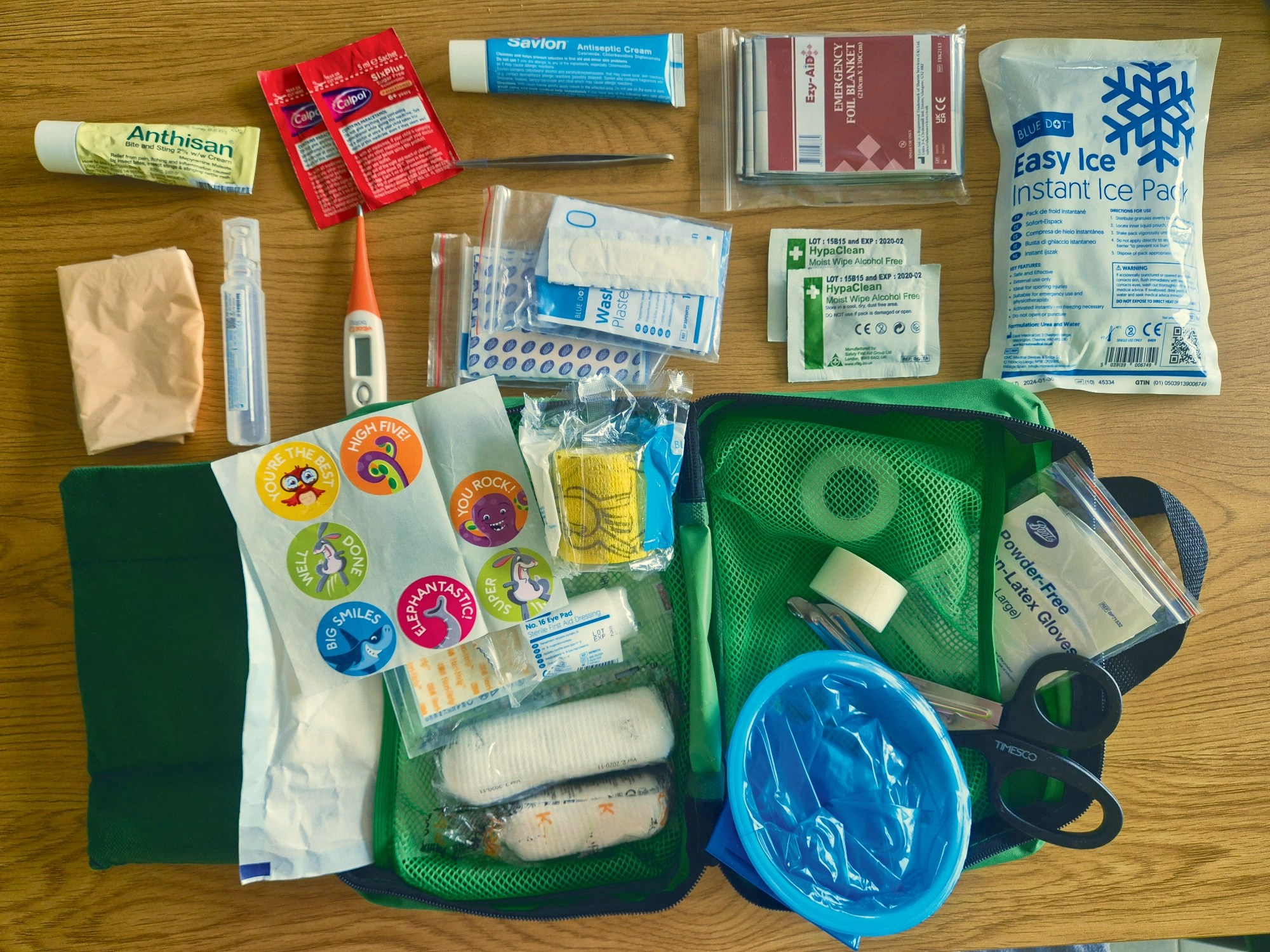
- First Aid Kit (Always Evolving):
- Our essentials include:
- Plasters, bandages, antiseptic wipes
- Tweezers, Calpol sachets, suncream
- Insect repellent, mini ice pack, blister plasters
- Emergency details card
- Steri-strips (after that biking incident!)
- We started with a basic Boots kit and now have a souped-up version that lives in a bigger pouch.
- Our essentials include:

- Emergency Gear:
- Whistle, torch with spare batteries, and a multitool. Every child carries their own whistle (on their bag) so it’s always on them – even if their bag takes a walk without them.
- Shelter and Warmth:
- Lightweight waterproofs, extra socks and jumpers, and an emergency foil blanket – these take up barely any space and can be lifesavers..
- Food and Water:
- High-energy snacks (flapjack, Kendal Mint Cake, cereal bars) and water. Each person carries their own so no one’s stranded without supplies if separated.
- Comfort & ID for Children:
- A laminated emergency info card, a small toy for comfort, and a sticker with their name, your number, and your postcode on their whistle or jacket. Peace of mind in a pocket.
- Communication:
- Fully charged phone + power bank
- Satellite tracker or GPS beacon if you’re going remote
- Smartwatches with GPS for children can be game changers
During the Hike
- Stay Together:
- Our rule: you can run ahead, but never out of sight. We hike in single file – Dad in front, me behind, kids sandwiched safely between.!

- Set a Child Pace:
- It’s a hike, not a race. Stop often, snack regularly, and avoid turning the fun into a slog.
- Monitor the Environment:
- Keep an eye out for changing skies, trail conditions, or curious cows. Be flexible and ready to turn back or take an alternate route.
- Practice Safety Drills:
- Teach children:
- What to do if they get lost (sit down, stay put, blow the whistle)
- Not to panic
- To put on hi-vis bag covers for visibility
- And why we don’t dress them in camouflage gear (cool… but unhelpful in a search!)
- Teach children:
In Case of Emergency
- Injury: Use your first aid kit, stay calm, and call for help if needed.
- Lost Child: Retrace steps, use your whistle, and contact emergency services if you can’t find them quickly.
- Bad Weather: Seek low, safe shelter, use emergency blankets, and stay warm.
- Wildlife Encounters: Keep children close and remain calm. Slowly back away, and never run. Make noise to deter wild animals without provoking them. If you come across livestock, walk slowly and calmly past them, and as far away from the animals as possible.

5. Post-Hike Debrief
- Debrief Together:
- What worked? What didn’t? What was so cool (and what was “so boring”)? Use the feedback to adjust your future plan.
- Restock and Recharge:
- Repack the first aid kit, replace snacks, wash those muddy clothes, and give yourself a pat on the back!
Final Thoughts
Every family hike teaches us something new. Over time, your emergency plan will evolve to fit your childrens’ ages, your confidence, and the wild places you love to explore. Whether you’re climbing hills or strolling old railway lines, a little prep = a lot of peace of mind.
Happy hiking, and stay safe out there! 💚

Discover more from Treks, Trails & Travel
Subscribe to get the latest posts sent to your email.

3 thoughts on “Hiking with Children: How to Stay Safe and Be Prepared for Emergencies”