
Whiteadder Reservoir wasn’t supposed to be a big adventure stop for us. We’d planned a simple detour on our road trip – just a look around, stretch our legs, and back in the car. Initially we’d considered tackling the 6-mile walk my husband had found when we first discussed visiting, but as Grandad had come along, (and he’s not one for long walks), we decided to opt for a half hour or so of nosing around where we could instead. I certainly didn’t think it would warrant a blog post, but what we found was quite fascinating and I thought it was worth a post, even if it’s just a short one!
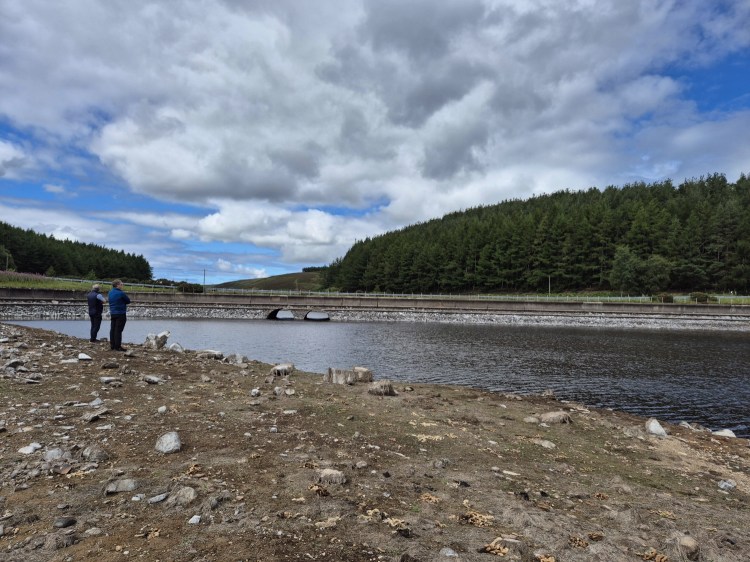
What we weren’t expecting when we arrived, was how low the water would be. After weeks of warm, dry weather, the reservoir had shrunk back to reveal a wide stretch of ground you’d normally never see. It felt a bit like someone had pulled back a curtain on a secret world.

Secrets Beneath the Water
We’d parked at the top of the road in a layby, and made our way down a tarmac track that was signposted as a footpath. Shortly after, Grandad leading the way, we detoured across the grass toward the reservoir. There were clearly a lot of rabbits in this area, aside from the tell tale droppings, it was like walking across a minefield dodging all the rabbit holes 😅.
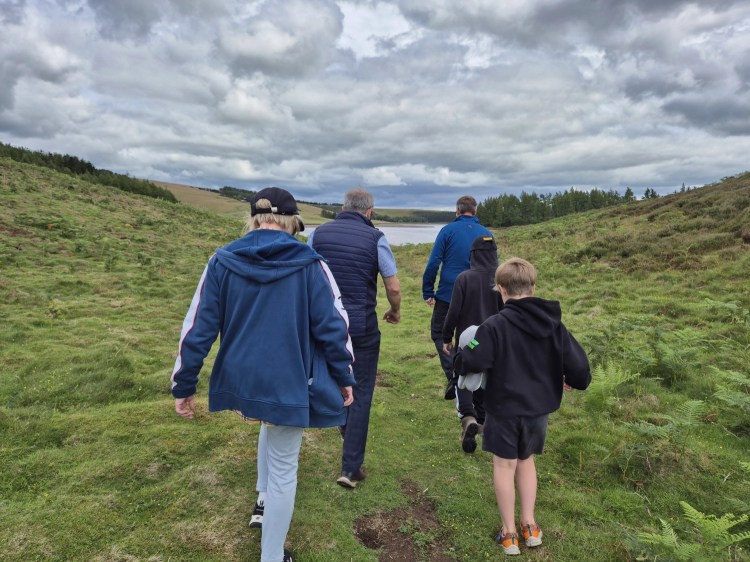
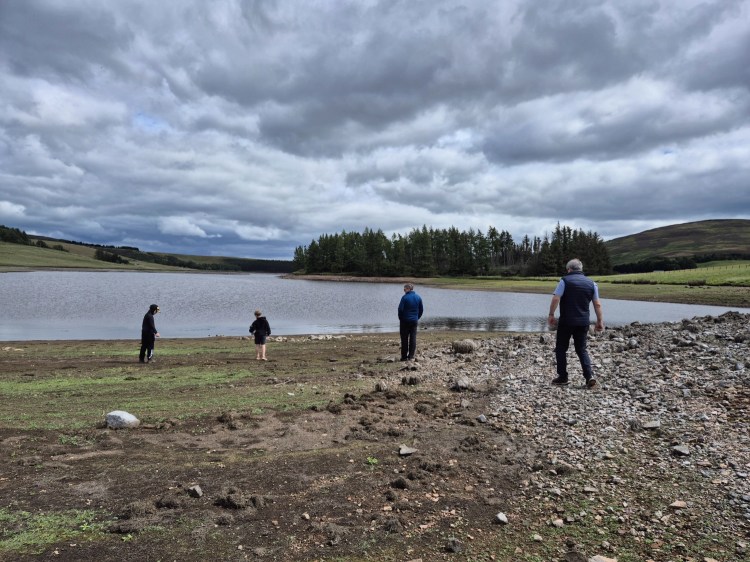
The low water level meant there was a large hard mud platform leading to the waters edge, and it was here we started to walk, following the water to where the stream enters the reservoir.


As we turned around, we noticed just a few bricks scattered on the dry ground. Odd. Then, as we wandered further, we spotted more – sections of wall, branded house bricks, a chimney base. It was like stepping into the ghostly remains of a place that had been forgotten.


We couldn’t help but wonder what secrets lay beneath the water here? And on a detour via Duns for a coffee after our visit, we googled and discussed what we could find out. The boys were just as fascinated with it as we were and it was fun to all get involved on the conversation.
When Whiteadder Reservoir was built in the 1960s to supply water to East Lothian, the rising water drowned a handful of buildings belonging to the old farming community of Penshiel. Unlike some reservoirs where whole villages were lost, here it was mainly a couple of houses, farm buildings and outbuildings – but they were still homes, still places where people once lived and worked. It was quite sad and I can only imagine how it must’ve felt for the families seeing their homes being submerged. And sadly I know this isn’t an isolated case.
Seeing what little remains on a dry day is a stark reminder of how life in the valley changed forever when the dam was built. And today it proved to also be a stark reminder as to how dry this summer was turning out!
A Tiny Frog Lightens the Mood
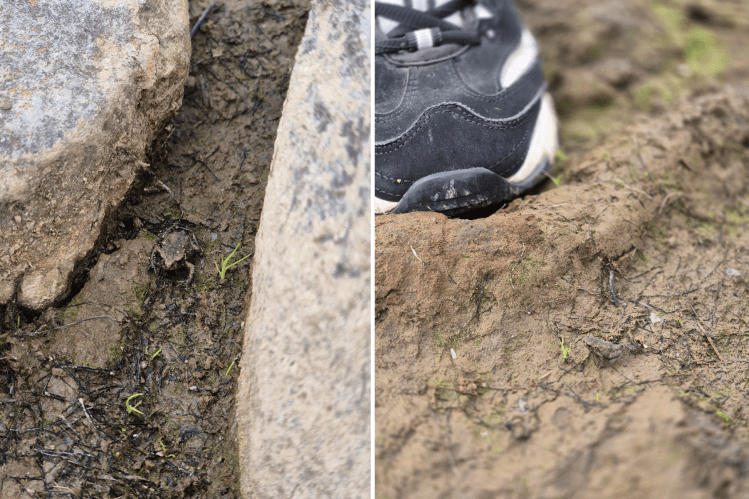
As we poked around the debris, the boys thoroughly enjoying their treasure hunt, we spotted the tiniest frog between some bricks. I managed to capture a photo of him against my Mums trainers to really help gauge just how small this little fella was!
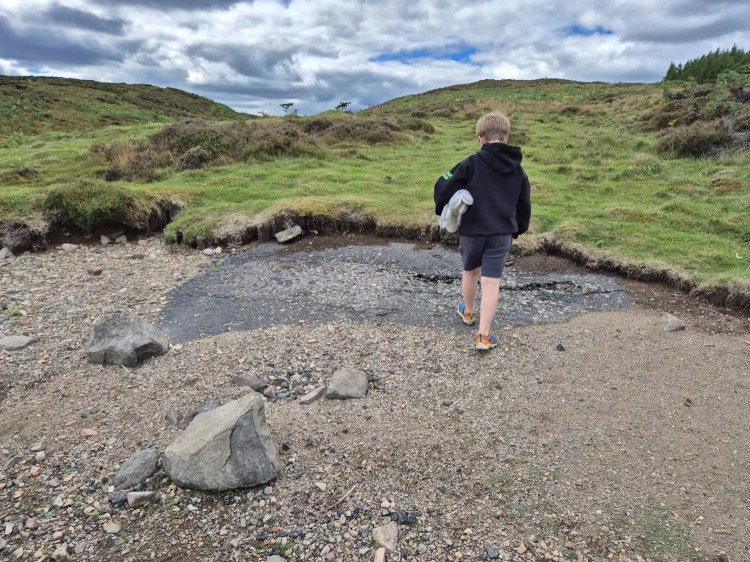
And as we made our exit, we also stumbled across this random stretch of tarmac, almost entirely covered now, it’s become visible along with the remains of the houses – perhaps the original track to said houses?
Short but Fascinating
There isn’t a circular walking route around Whiteadder Reservoir, which is a shame because the scenery is gorgeous. However, even without a big walk, this short stop ended up being an unexpectedly fascinating detour on our roadtrip. I do find stories of drowned buildings and the like very intriguing, I definitely think I’d have enjoyed being an urban explorer in another life!
If you do visit, keep an eye out for the Herring Road Walk up by the layby – a historic route once used by women carrying baskets of fish from Dunbar inland. I think this is part of the walk my husband found initially, and I’ve filed that one away for next time we’re here without Grandad!

Would we go back?
Definitely. It was a perfect reminder that even a quick stop, with no plans and low expectations, can turn into a mini-adventure full of history, wildlife, and curiosity. Have you visited Whiteadder Reservoir or any other reservoirs with submerged villages/communities?
Fact Box: Whiteadder Reservoir
- Location: East Lothian/Scottish Borders
- Built: 1960s to supply water to East Lothian
- Whiteadder Reservoir sits right on the border between East Lothian and the Scottish Borders in Scotland.
- The dam wall and main access (including the car park) are on the Scottish Borders side, just off the A6112 near Cranshaws.
- Much of the water body itself extends northwards into East Lothian.
- Flooded buildings: Two houses and several outbuildings belonging to the small farming hamlet of Penshiel
- Length of reservoir: 5 km
- Notable: On very dry years, parts of the original buildings are exposed as the water level drops
- Nearby: Herring Road Walk (historic route from Dunbar to Lauder), and several moorland walks in the Lammermuir Hills
Related Posts You Might Like:

Discover more from Treks, Trails & Travel
Subscribe to get the latest posts sent to your email.

The house bricks that are seen in the dry ground were intriguing. It open stories of a long forgotten years. Amazing adventure, EJ
LikeLiked by 1 person
Oh it was brilliant, truly fascinating and I do love a good mystery! 🙂
LikeLiked by 1 person
The Ladybower Reservoir in the Peak District has quite substantial remains beneath the water that appears when the levels are very low
https://letsgopeakdistrict.co.uk/the-secret-drowned-villages-under-ladybower-reservoir/
LikeLiked by 1 person
I didn’t realise they demolished the houses before filling the reservoirs. The church spire was definitely a chilling view! Wonderful photos, it’s hard to believe all those beautiful buildings were just demolished and drowned, you’d think there would be better, less populated places to build these reservoirs!
LikeLike
The place we are heading to in France has a lake that was supposed to submerge a small village as it was largely deserted and dying. Then they decided to reduce the level of the planned lake and the village became lakeside and is now thriving. It’s o e my all ti e favourite places now
LikeLiked by 1 person
Now that’s a lovely story! What a turnaround 🙂
LikeLiked by 1 person
So interesting this reservoir bed with these bricks.
LikeLiked by 1 person
It was fascinating, and I love a good mystery!
LikeLiked by 1 person