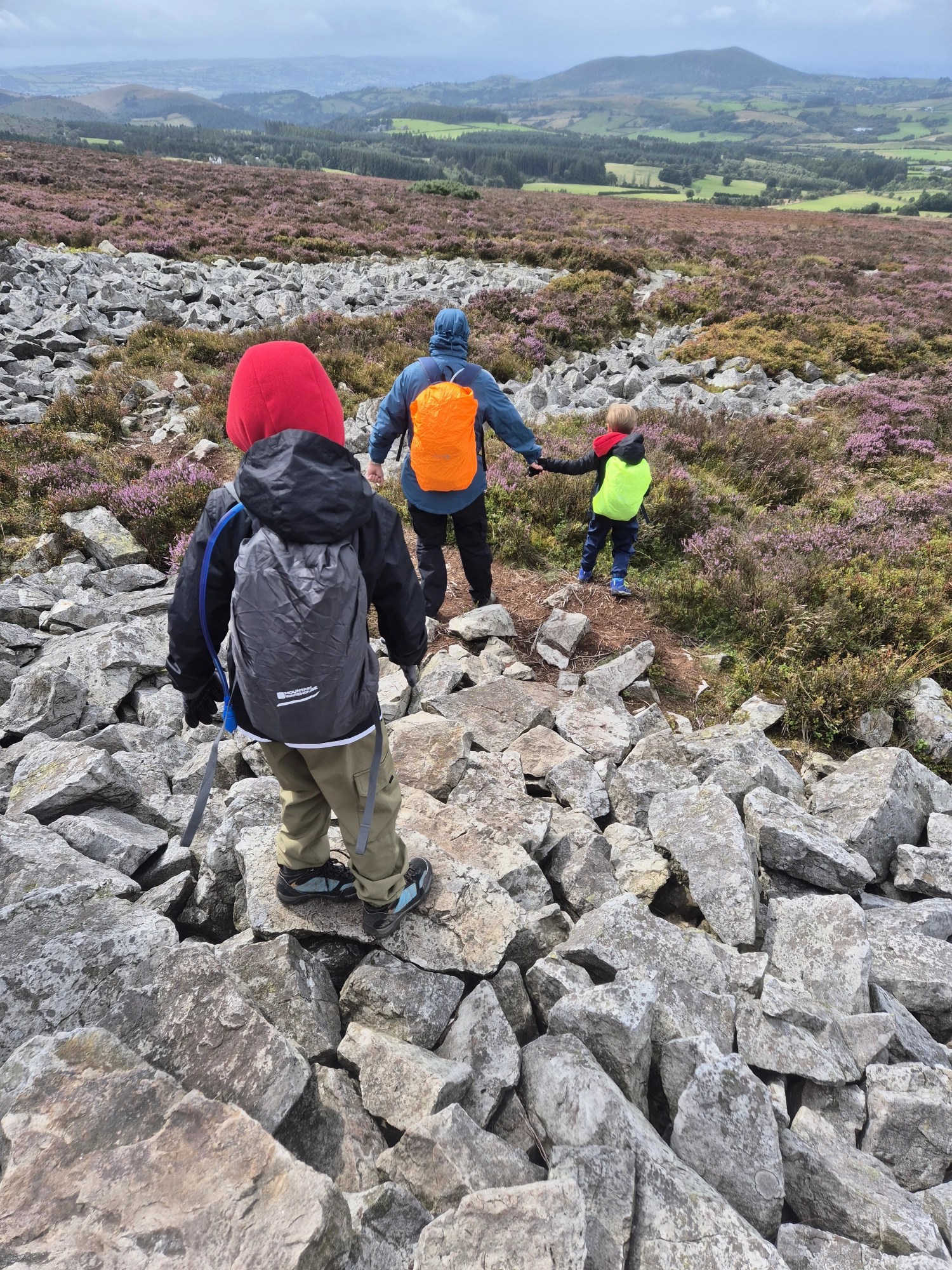
There is a definite chill in the air on our walks now. Last Sunday I was so thankful for my thermals! Preparing families and children for autumn and winter walks or hikes requires thoughtful planning to ensure safety, comfort, and enjoyment. We don’t intend to stop walking through the colder months, and are busy making plans to ensure we can do it safely and enjoyably. Here’s a guide to help you too:
1. Dress in Layers
- Base Layer: Start with moisture-wicking fabrics like merino wool or synthetic materials to keep skin dry. Realistically, if you are on a budget (like us) you probably aren’t going to be forking out for merino base layers for your ever-growing children. We have all just grabbed the cheap and cheerful range from Go Outdoors and we have had no issues yet!
- Insulating Layer: A fleece or padded jacket for warmth – just make sure children can easily move. During the milder autumn months, our boys like to wear a fleece. We found some great ones from Mountain Warehouse that included a hood too. In the colder months they wear their padded jackets – sometimes with the fleece when it’s really cold!
- Outer Layer: Waterproof and windproof jackets and trousers are essential to protect against rain and wind. To try and keep weight down in our backpacks we’ve got these great fold up coats and trousers to go over our insulating layers from Mountain Warehouse. I’ve been pleasantly surprised at how waterproof they are, even if they aren’t the most technologically developed outer layers out there! For those on a budget, these are brilliant! Wipe down if muddy and air dry before packing them up again and they’ll last long enough to pass down to younger siblings too.
- Accessories: Hats, gloves, and scarves help retain heat. Mittens are better for young children, as they keep hands warmer (I have terrible circulation and even I prefer mittens). We use snoods instead of scarves to prevent them getting caught on things, but also because they can be very uncomfortable bundling up under all the layers. Snoods can also conveniently be worn in various ways to warm ears and heads too. Look for waterproof but not too bulky gloves or mittens to ensure the children’s hands stay dry and warm but can easily climb stiles or do up zippers.
2. Footwear
- Invest in waterproof hiking boots with good ankle support. Thick, moisture-wicking socks help keep feet warm and dry. If you are a little lost at where to start with the walking boots out there, why not take a look at my helpful guide I put together when we last replaced our childrens boots. I highly recommend some decent socks too – this is where I do treat the boys to merino wool. Socks seem to last ages for our boys, so we know we will get some good wear from them – check out places like Amazon that have some great merino options for fab prices!
- For muddy conditions, consider wellies or gaiters to protect legs and trousers. I can’t recommend any gaiters yet as we don’t own any, but I’m starting to do my research as I think we’ll make good use of them on our winter walks, with all the long wet grassy fields and muddy woodland walks we have planned!

3. Essential Gear
- Backpack: Carry a small one with essentials like snacks, water, extra layers, and a first aid kit. We’ve got the children into the habit of carrying their own small backpack with water and a couple of snacks, a whistle, any extra layers of clothes/waterproofs and an emergency blanket. I’ll carry anything else like the maps, first aid kit etc, so my bag is much bigger. You’ll want to look for bags that come with a built in waterproof cover (ideally a bright one) – or you can grab a generic one from Amazon pretty cheaply!
- Blankets: Keep a light, waterproof blanket in case of stops. I don’t feel this is necessarily essential for our shorter walks at the moment, but for longer walks it’d be a welcome way to keep warm when you take longer stops. Perhaps this time next year once the boys have built up some endurance I can report back on a decent one!
- Headlamps or Torches: Shorter days mean early dusk, so it’s good to have light sources. My husbands job means he has collected a wonderful assortment of headlamps and torches over the years. Most of these have come from places like Amazon. Find ones with good reviews and make sure you also carry a spare battery or ensure its fully charged before you leave.
- Be Seen. Years ago I always thought we had to be ‘sympathetic to the landscape’ and wear ‘sensible’ colours. Probably because not so long ago outdoor clothing was all khakis and blacks. Fortunately I’ve come to my senses, and so have the outdoor clothing companies, as there are so many bright colours to choose from now. Remember, if you get yourself into trouble you want to be seen! I shamelessly wear bright pink clothing, and my boys have bright clothes too, including a brilliant fluorescent yellow beanie, perfect for our duller winter walks!

4. Snacks and Hydration
- Pack high-energy snacks like granola bars, nuts, or dried fruit to keep children’s energy levels up. We love to make a flapjack full of dried fruit and seeds and often take this out with us, along with fruit (grapes are my favourite – hydrating and yummy!). When I’ve not had time for baking I fall back on these tasty nature valley protein bars – we all enjoy these! We also try to keep a bar of kendal mintcake in our bags, because if it’s good enough for Mount Everest explorers, then it’s good enough for us!
- Even in cold weather, children can dehydrate, so bring plenty of water and consider insulated flasks for warm drinks like hot chocolate. Our boys have a 1l water bladder in their backpacks (cold drinks only), which allows easy access to drinks without stopping and with no excuses for not drinking enough (which they can be terrible at not doing!). If we carry a warm flask, it stays in an adults bag for us to dish out.
5. Safety Tips
- Teach children about weather changes: Explain the importance of staying dry and warm, as hypothermia can be a risk. We’ve discussed why we don’t wear our everyday cotton clothing when walking, and also told the boys about our emergency preparedness plans, and how to use their emergency blankets and whistle if they get lost.
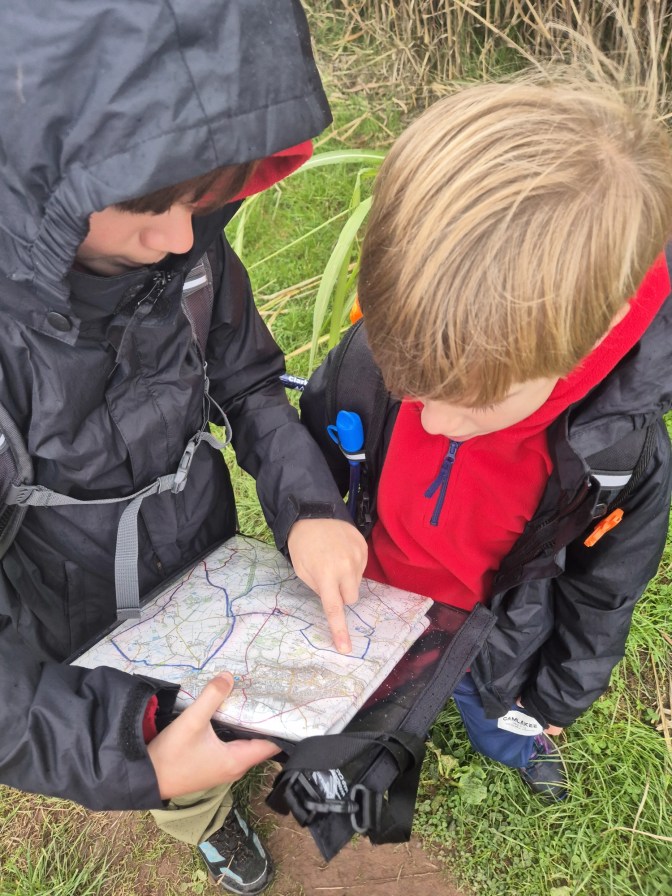
- Always have a map or GPS, and make sure older children understand the trail route. We always bring both a physical map and phone, because signal in a lot of these rural areas is nearly always non existent and shouldn’t be relied upon 😅
- Check the weather forecast before heading out and plan accordingly. Consider weather alerts to be a guide that it isn’t a good day for an outdoor adventure!
6. Make it Fun
- Create a nature scavenger hunt to keep children engaged. Here are some other ideas you could consider to entertain children!
- Breaks are essential: Take frequent stops and choose short, manageable routes. Follow your children’s leads – we find our boys will let us know when they need a break.
7. Emergency Preparedness
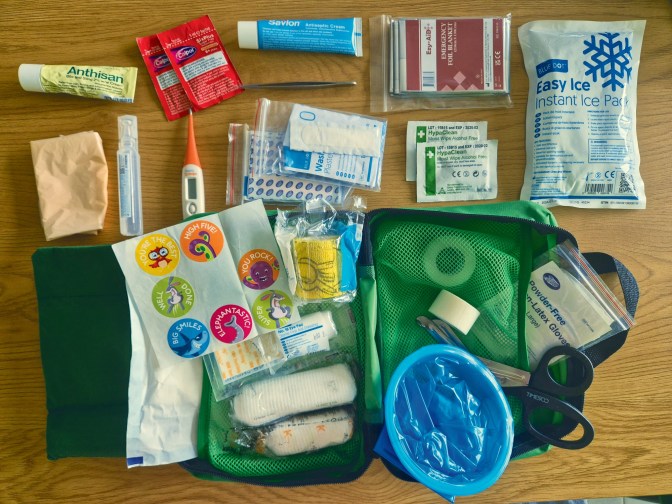
- Carry a basic first-aid kit: include band-aids, antiseptic wipes, and any necessary medications. If putting together a first aid kit seems daunting (it was for me!) why not take a look at my helpful post on where to start building your first First Aid Kit!
- Consider a whistle or phone with a location tracker in case of emergencies. We equip every one with their own whistle. Interestingly, our bags also have a built in whistle on the chest strap – brilliant! Check out our emergency preparedness plan here for some ideas on how you can keep your family safe.
8. Post-Walk Care
- After the walk, have warm clothes and snacks, maybe even a blanket, waiting in the car to ensure the children stay warm. There’s nothing nicer than changing into dry clothing and snuggling up in a blanket with a warm drink after a cold walk! There’s a good chance the children will catch a nap on the way home too once they’re snuggled up. If you’re walking directly from your home, a nice warm shower or bath can work wonders for your body and your mind!
With proper preparation, families and children can have safe and enjoyable autumn and winter hikes. If you have any of your own helpful tips, please let us know!

Discover more from Treks, Trails & Travel
Subscribe to get the latest posts sent to your email.

All great tips…
LikeLiked by 1 person
Thank you! I hope they’ll be useful for other families. Let me know if there’s anything I’ve missed 🙂
LikeLike
Strangely I have two children with opposite temperature levels. My youngest is a freezer, needing to be wrapped up at the merest sign of a chill. But my eldest will walk in a t shirt across Siberia in December. Always baffles me.
LikeLiked by 1 person
Haha I am very much aligned with your youngest! My youngest is like your eldest, I feel cold just watching him in t-shirts and shorts, I’m sure he’ll be a postman 🤣 My eldest will dress more sensibly, and whilst he never claims to be too hot or too cold, he has a tendency to refuse to take layers off, and even on days when I’ve taken off my jumper, he’ll still be in his 😅 children eh?!
LikeLiked by 1 person